6 minPublished: Aug 31, 2026
ArticleProfessional Services

Is your AI Ready Data Center Migration Strategy Falling Behind?

AI is exposing what legacy infrastructure cannot do. Discover how to build an AI ready data center migration strategy that keeps pace without budget overruns.

Steve Corbett

Steve Corbett

Group Client Solutions Director at Vertage

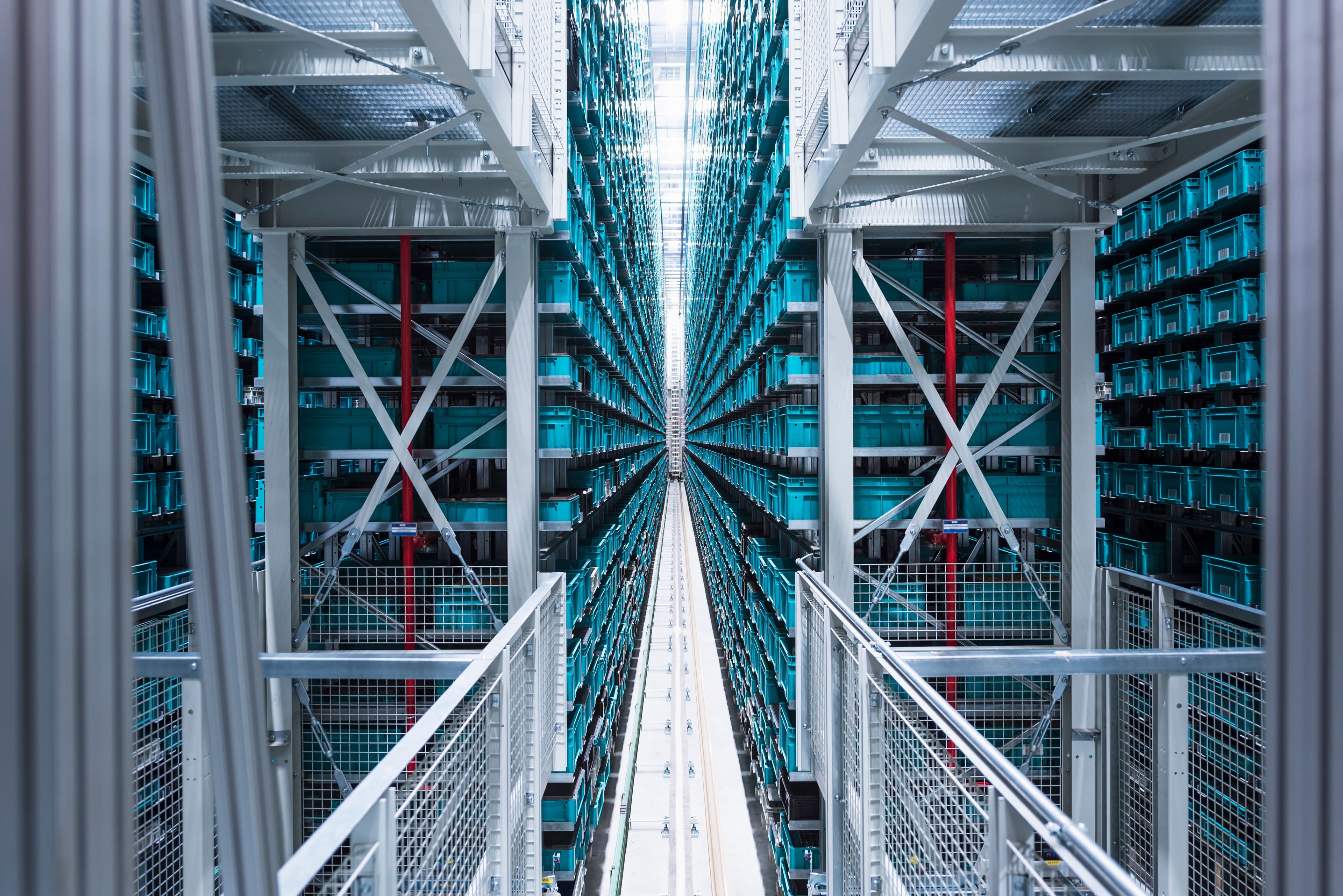
Vertage employers data centre aisle infrastructure.

AI is putting huge pressure on enterprise infrastructure, exposing the limits of legacy data centers and traditional migration plans. For CIOs and CTOs, the challenge is no longer simply whether to move, but where AI workloads should run, what needs to change, and how to exit safely.

This article explores why an independent view of your current estate is essential for building an AI-ready data center migration strategy that reduces risk and supports future growth.

Is Your AI-ready data center migration strategy falling behind?

Every CIO and CTO is currently under the same pressure: The board wants AI in production, and it wants it now. Large language models (LLMs) have gone from a curiosity in the innovation lab to a line item the CEO asks about at every board meeting.

Enterprise AI adoption has moved fast - recent industry surveys show 88% of organizations now regularly use AI in at least one business function - with many organizations now running several models concurrently rather than a single pilot.

One question is not getting enough attention: “where is all of this AI going to run?” In many cases, the answer is “not on the infrastructure organizations already have.”

AI needs a new kind of Data Center

For the last decade, the data center conversation was about efficiency, consolidation and moving everything to the Cloud. AI has changed the terms of that conversation entirely. High-density GPU environments can push rack power requirements many times beyond what a typical enterprise facility was ever designed for. Without purpose-built power, cooling and resilience, organizations take on real availability and operational risk the moment they try to bolt AI workloads onto legacy infrastructure.

It isn't just about power and cooling either. AI workloads behave completely differently to the traditional applications your data center estate was built around. Inference traffic spikes unpredictably, training runs can saturate an entire cluster overnight, and latency suddenly matters in a way it never did when the workload was a batch job.

Add in data gravity - the simple fact that moving large datasets between regions, clouds or on-prem environments introduces cost, latency and governance headaches of its own - and it becomes clear that “where AI runs” is now a strategic decision, not a technical afterthought.

Does one of these sounds familiar?

  • Your AI roadmap has stalled because your current provider simply doesn't have the power density, liquid cooling or GPU capacity to host what your Data Science and Engineering teams want to build - and retrofitting isn't realistic within your contract.
  • You've expanded into multiple AI platforms and Cloud services to get around the limitations of your existing estate, and now nobody can give a straight answer on what's running where, who owns it, or what it's costing.
  • The Board has signed off an AI-first, Cloud First and Data First strategy, and it's now your job to work out what stays, what moves, and what an AI-ready future estate actually looks like.

Whichever of these applies, exiting or re-platforming a corporate data center in the age of AI is a considerably more intimidating proposition than a standard Cloud migration ever was. It now demands a joined-up data center migration strategy that accounts for AI workloads from the outset. Common obstacles now include:

  • Risking data loss or interruption to mission-critical (and increasingly AI-dependent) applications during rationalization, consolidation and migration.
  • Ensuring architecture, security and observability best practice on new platforms - including the ability to trace exactly which data, model version and prompt touched a given decision, end to end.
  • Accurately assessing your existing application and data estate to work out what genuinely needs GPU-dense colocation, what belongs in hyperscale AI platforms, and what should simply be retired.
  • Avoiding the well-documented pattern of migrations that overrun budget and timeline while also carrying the cost of stranded assets, lease penalties and dual-running two environments at once.

So where do you start with a data center migration strategy?

The minute an existing provider finds out you're weighing up an exit, things can get complicated quickly. And I'd equally caution against letting the open market know too early - as you'll very quickly be surrounded by noise from sales teams pitching their own branded GPU racks, platforms and “AI-ready” solutions, which tend to tie you to exactly one horse again.

Before you can make any credible decision about where your AI workloads and the rest of your estate should live, you need to know what's actually in your data center today and have an honest view of your wider AI infrastructure readiness.

Don't be embarrassed if you don't. Long-standing contracts - sometimes running 10 to 15 years - mean complacency creeps in, and AI has only made the gap more obvious because suddenly everyone wants to know what compute, data and applications are available to build on.

You're in the same position a number of our clients have found themselves in: tasked by the Board with deciding where, how and when to move, and quickly realizing you don't have the current, foundational information you need to make that decision safely.

You have three options:

  • Ask your current provider for a full audit of your estate. This can quickly expose your exit plans, create difficult conversations and reduce your room to maneuver.
  • Try to do it internally. Every organization's resource is already stretched thin, and the specific skills needed to assess both legacy infrastructure and AI/GPU readiness in the same exercise are genuinely hard to find in-house – not to mention the Project Management resource to manage a piece of work like this.
  • Bring in an external, specialist team who are totally independent, technology and vendor agnostic, who understand the sensitivities on both sides, and can embed into your existing teams to deliver what's needed quickly.

How Vertage Professional Services can help

This is exactly the situation Vertage Professional Services has helped a number of organizations work through. Experience and independence are the key ingredients - we're not selling racks, cloud consumption or GPU capacity, so the recommendations we help you build are based on your data and AI aspirations, not our commission.

Every organization's starting point is different, but our specialist, managed project teams typically deploy to deliver pre-agreed outcomes:

  • A completed Single Source of Truth inventory of servers, applications, data and services - including, critically, your current and required AI/GPU compute footprint and its dependencies. What have you actually got right now, and what will AI need?
  • An enterprise-wide decision tree for migration and AI workload placement. What can move? What should move to a hyperscale AI platform, GPU-dense colocation, or stay put? What do you actually want to move?
  • Completed application and workload groupings, with an AI-readiness view layered in. What needs to move together, who owns it, is it still used, and what happens if it's switched off?
  • A high-level roadmap and timeline for migration and AI enablement. The practical “do-ing”, sequenced to avoid the budget and timeline overruns that derail so many of these programmes.
  • An updated cloud migration strategy and Cloud & AI Infrastructure Strategy, with independent recommendations on hosting, data residency and sovereignty. A co-created blueprint for your future state, based on fact and hands-on experience, not a sales pitch.

Cut through the noise of AI in data center migrations

The benefits of getting AI genuinely embedded in how your organization operates are well documented, and the upside when it's running on the right foundations can be transformative. But the pace of change - and the noise it generates around infrastructure decisions - means this is not a decision you can afford to get wrong, or default into by accident because your existing data center relationship is easiest to leave alone.

If you'd like to talk through where your organization stands on creating their own AI-ready data center migration plan, get in touch with the Vertage Professional Services team.

Steve Corbett

Steve Corbett

Group Client Solutions Director at Vertage

Connect on LinkedIn

About the author

Steve Corbett is a workforce solutions leader with 22 years of experience across professional services and staffing, built on a genuine 360-degree view of the industry. His background includes Consultancy, Statement of Work services,…