5 minPublished: Nov 25, 2026
ArticleLife Sciences

Life Sciences Companies That Report It Say 31% of Their Workforce Is Contingent

As part of our “60 Second Stats” series, here’s a quick read on key workforce planning numbers (and a checklist to keep you on track).

V

Vertage

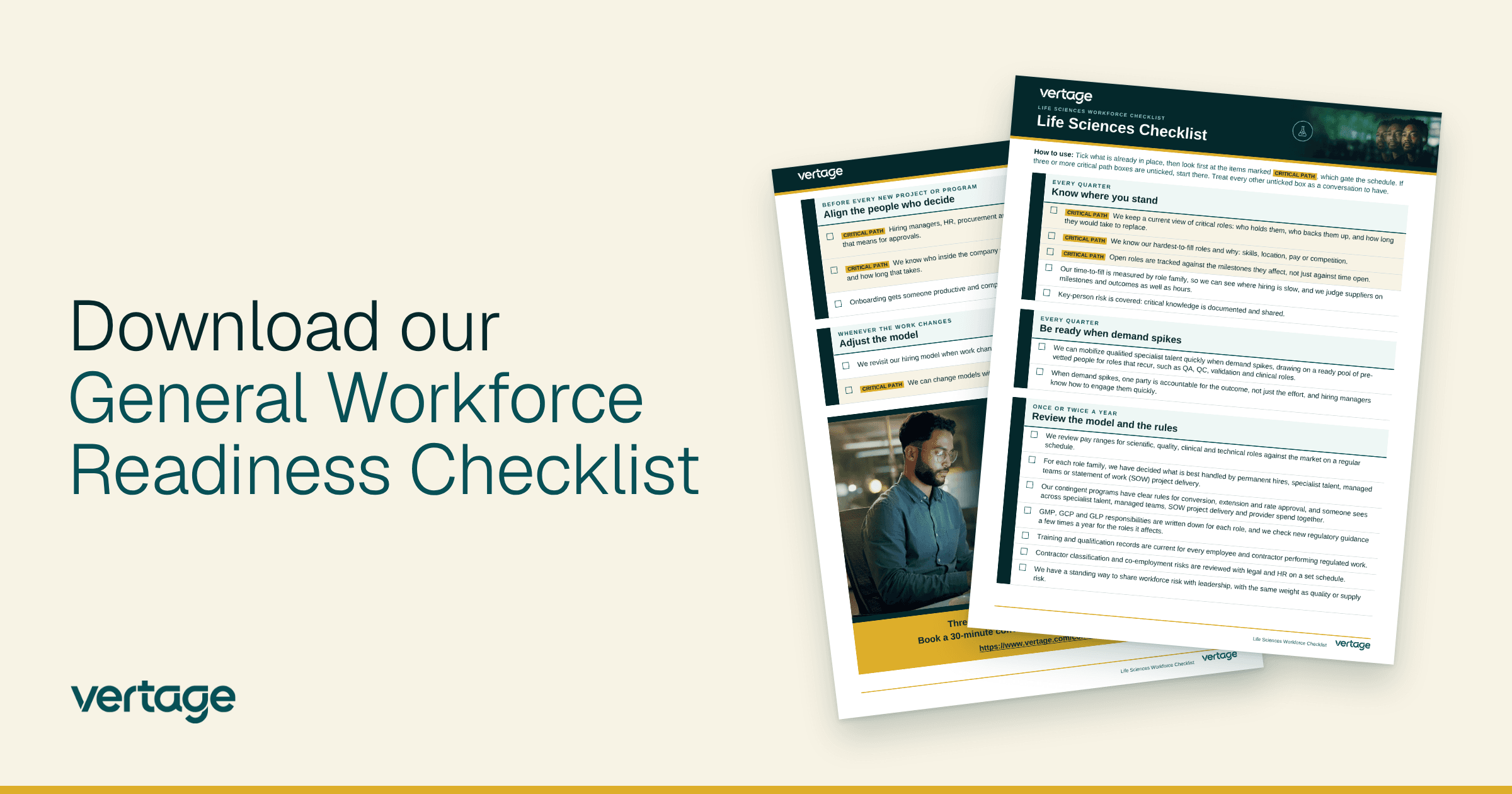
Header reading "Download our General Workforce Readiness Checklist" beside two pages of the checklist

For life sciences companies that report their contingent workforce numbers, an average of 31%¹ of their workforce is contingent. Many plans don't account for that share. (And the actual percentage might be even higher.)

One way to prepare your organization for changes in workload, priorities or deadlines is to build some flexibility into your workforce plan from the outset. Here are some thought-starters.
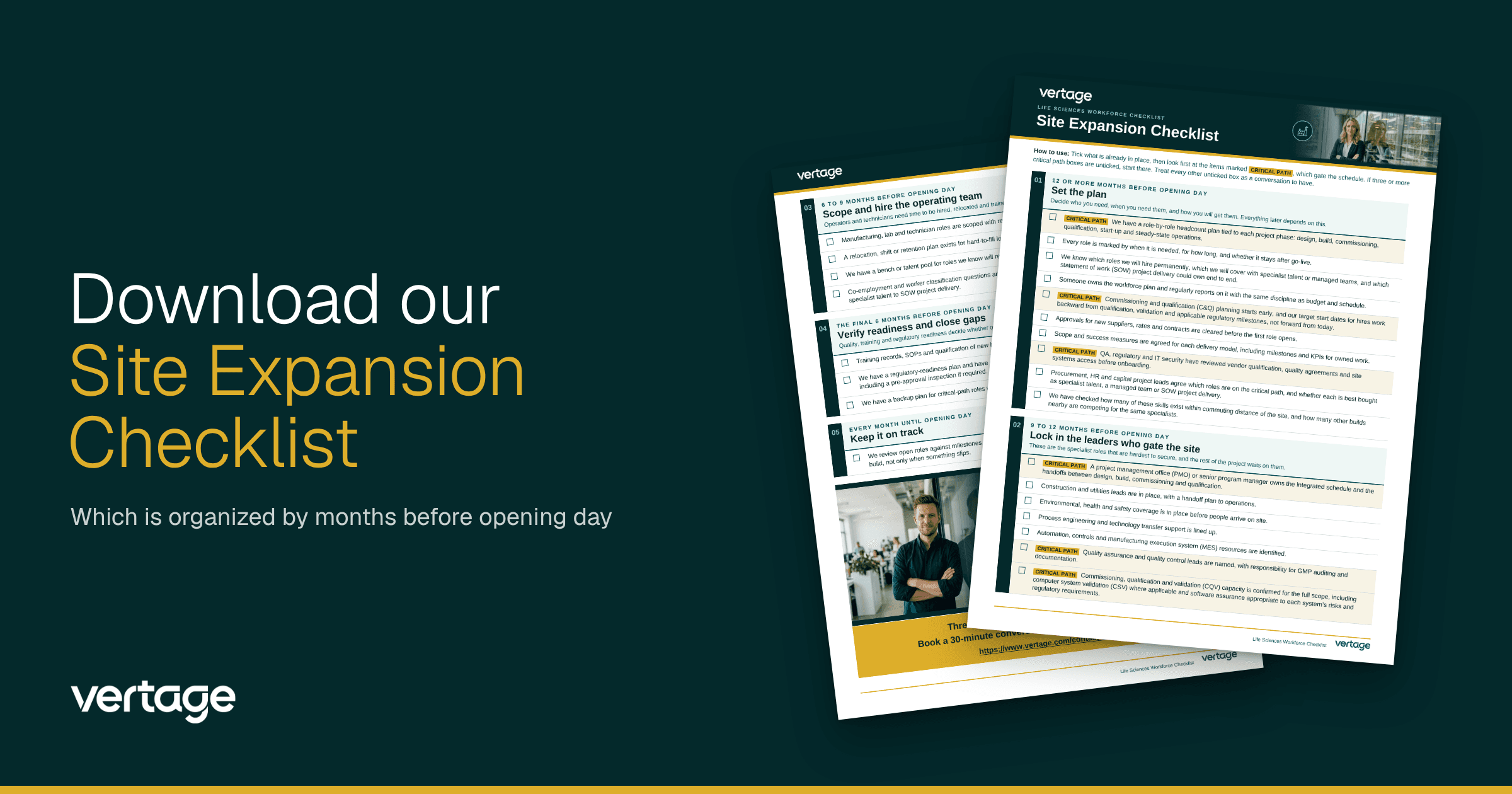
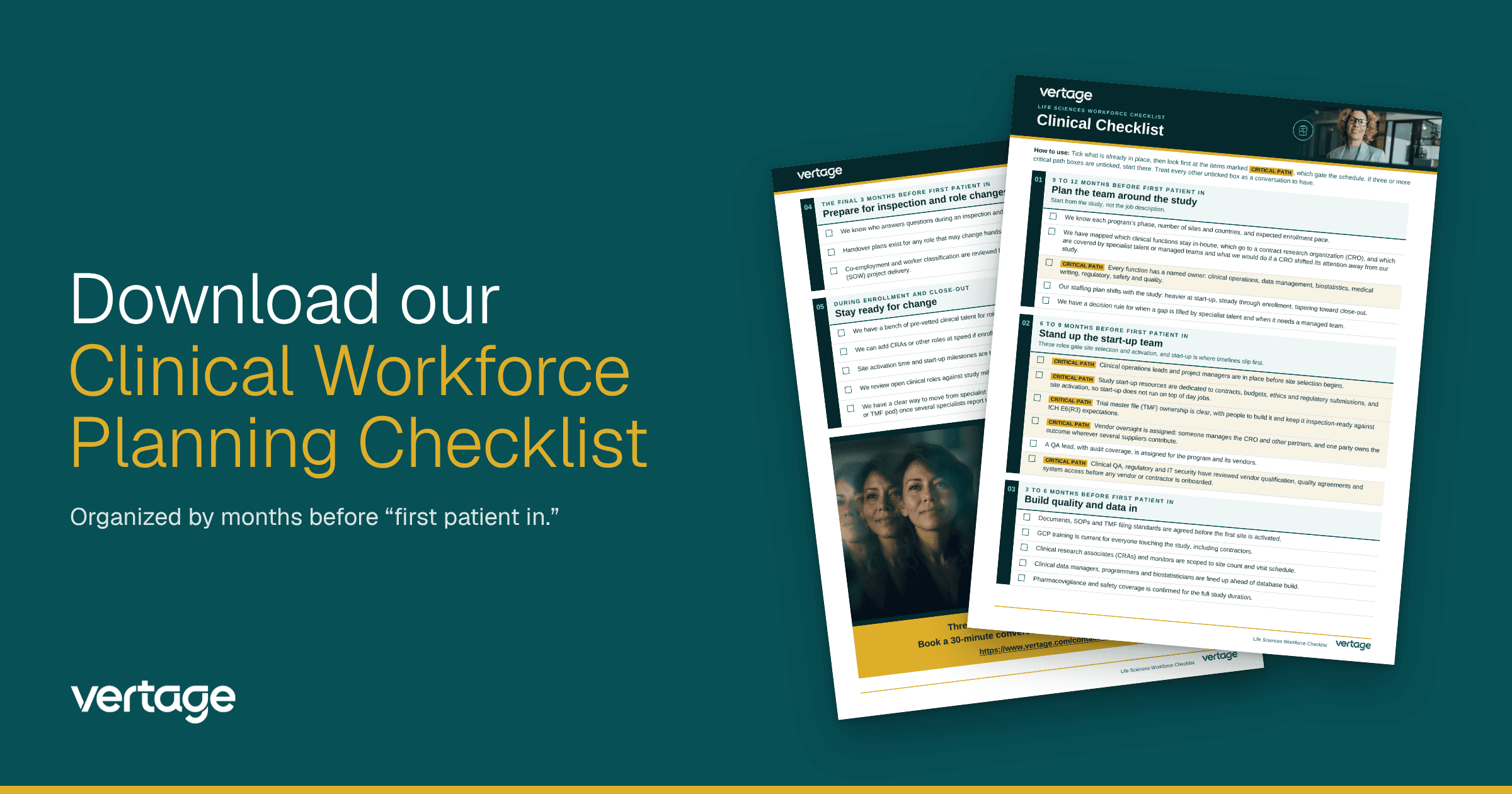
Every quarter, take stock.

  • Look at your most critical roles. Who's in them? Who could step in if needed? How long would it realistically take to find a replacement?
  • Look beyond how long a position has been open. Which deadlines could an unfilled role jeopardize? Start tracking how long different types of roles –and skills– take to fill.
  • Assign an owner. Right now. Someone should be responsible for reporting workforce risks to leadership, just as quality or supply risks are reported.

Don't wait until you need people to start looking for them.

  • Build a pool of pre-vetted candidates for roles you regularly need to fill, such as QA, QC, lab, manufacturing and clinical roles.
  • Keep that list current and make sure hiring managers know how to access it quickly.
  • Run a skills gap analysis, then build a development plan to train up high-potential candidates before you need them.

Once or twice a year, revisit how you're staffing.

Give some thought to which types of roles are best suited to each staffing model:

  • Permanent hires: Roles that are critical to your organization's long-term capabilities.
  • Specialist talent: Individual roles with a specific need or timeframe.
  • Managed teams: Entire functions that may need to grow or shrink as workloads change.
  • SOW project delivery: Clearly defined pieces of work with specific deliverables.

Make sure you have consistent rules around conversions, extensions and rate approvals, and that someone has visibility into spending across all four models.

When the work changes, revisit the plan.

Before starting a new project, get hiring managers, HR, procurement and finance together. Agree on which hires take priority and who approves new suppliers or staffing models.

Revisit those decisions if the work changes in size, duration or complexity. Involve Legal and HR in reviewing co-employment and worker classification considerations.

Ideally, work with a workforce partner who can accommodate these changes without putting you through supplier onboarding all over again.

Download our General Workforce Readiness Checklist

Loading form…

¹ Skills Alliance Enterprise, "Adapting to Change" (2025): average among the 47 of 220 life sciences organizations that report it.